The ability to predict ADMET (Absorption, Distribution, Metabolism, Excretion and Toxicity) properties is critical to accelerating new medicine discovery. In an effort to improve predictive models OpenADMET have initiated a series of blind challenges.
The latest of these challenges is the OpenADMET PXR Blind Challenge. The challenge is in two parts an Activity Dataset of over 11,000 molecules that can be used to produce machine learning models. In addition there is a Structure dataset containing 184 new X-ray structures with small molecules bound together with In addition, 68 structures from the PDB.
The pregnane X receptor (hPXR) is the major determinant of CYP3A gene regulation by drugs and other xenobiotics. In addition, PXR mediates induction of P450s 2B6, 2C8/9, and 3A4, as well as the drug transporters MDR1, organic anion transporting polypeptide C, bile salt export protein, and multidrug resistance-associated protein 2.
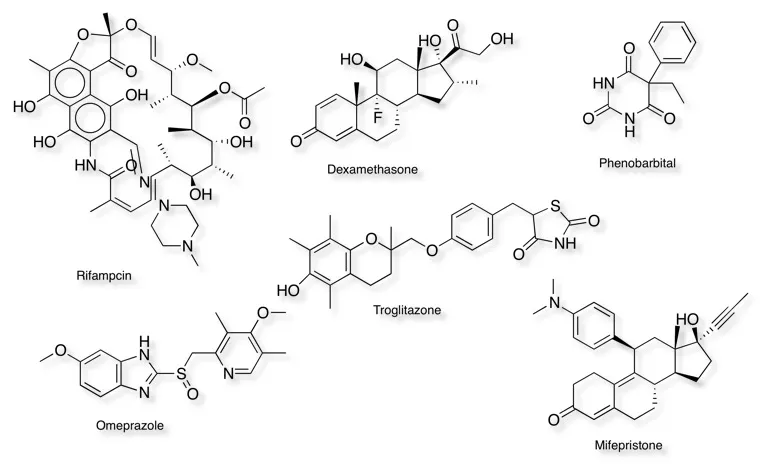
The binding site is large and hydrophobic with several important hydrogen bonding interactions. There may be multiple binding conformations. Similar to CYP3A pharmacophore, many (but not all) CYP3A substrates/inhibitors are also CYP3A inducers. As shown below many structural classes can be accommodated by the receptor
Whilst 184 X-ray structures of the receptor with ligand bound are available, navigating between the structures is a significant challenge. Fortunately, Manish Sud has done much of the heavy lifting for you and has generated a PyMOL session file named OpenADMET-PXR-Crystal-Structures-Aligned.pse.zip (258M). It provides a ligand centric hierarchical views to visualize the data. The B factor visualization is also available in the PyMOL session file.
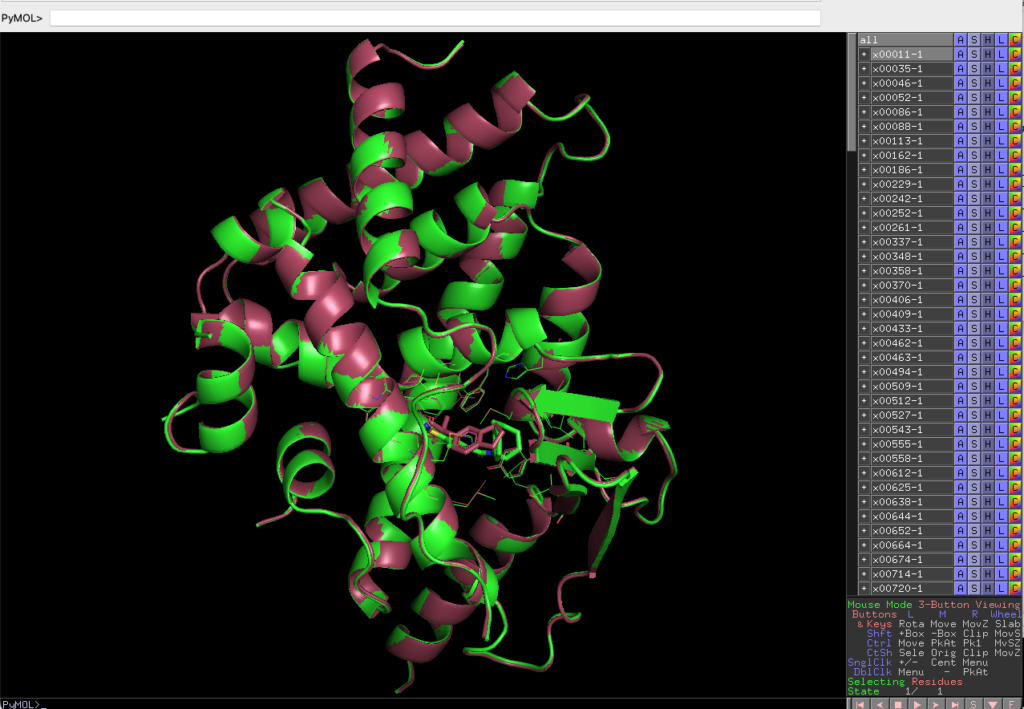
The uncompressed file is fairly large (1.25 GB) so will take a little while to load but once loaded it provides a means to easily compare structures. This is a fantastic resource.