Nathan Brown posted an interesting snippet on LinkedIn
I vibe-coded a chemistry app last weekend. It started as a curiosity, but it’s turned out to be a useful little tool.
Structure Lens is a mobile web app. You take a photo of a hand-drawn chemical structure, and it turns your drawing into a molecule. It then calculates its properties, generates and minimises a 3D structure, places the compound on a drug-space map, and points you to relevant public databases for more information.
You can see the result here https://nathbroon.github.io/structure-lens/
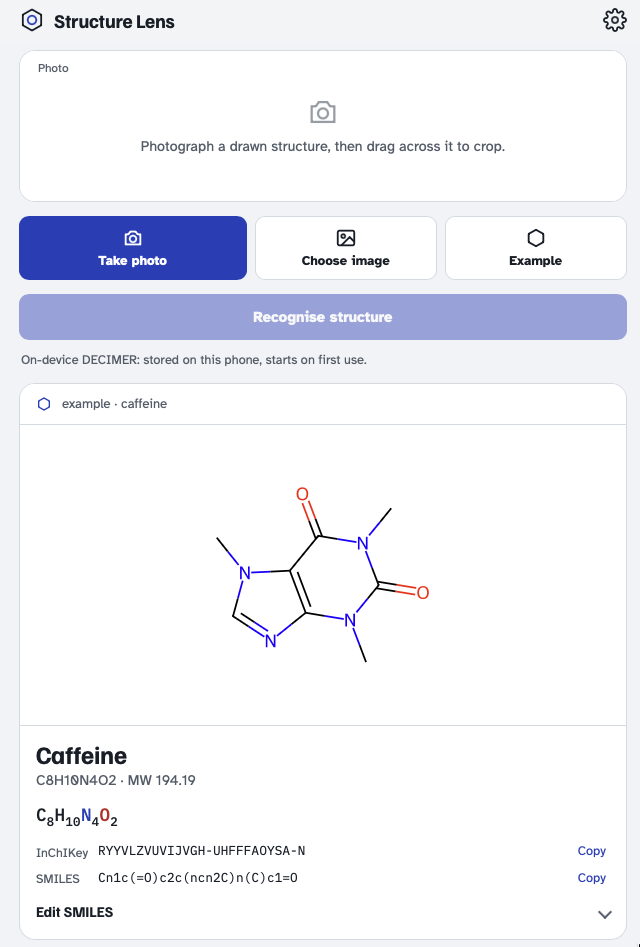
Nathan also makes a critical point
PubChem, ChEMBL, SureChEMBL, UniChem and Wikidata for the data.
That’s decades of algorithm development, model training, curation and open-source maintenance, much of it publicly funded, by people who rarely get credit when it all “just works”.The other thing vibe coding hides is that the AI didn’t know what to build. I did. I chose which tools to put together and noticed when a property looked chemically wrong. I knew that an InChIKey is the right key for querying databases, that recognition errors need an editable SMILES box, and that a minimised conformer is not “the” 3D structure.
AI coding tools are a huge accelerator, but they do not eliminate the need for domain expertise. They stand on the work of everyone who came before.