On October 14th the OpenBind Blind Challenge was launched, the target is the Zika virus NS2B-NS3 protease. This challenge focuses on predicting how small molecules
Category: Macinchem Blog
The blog for the website
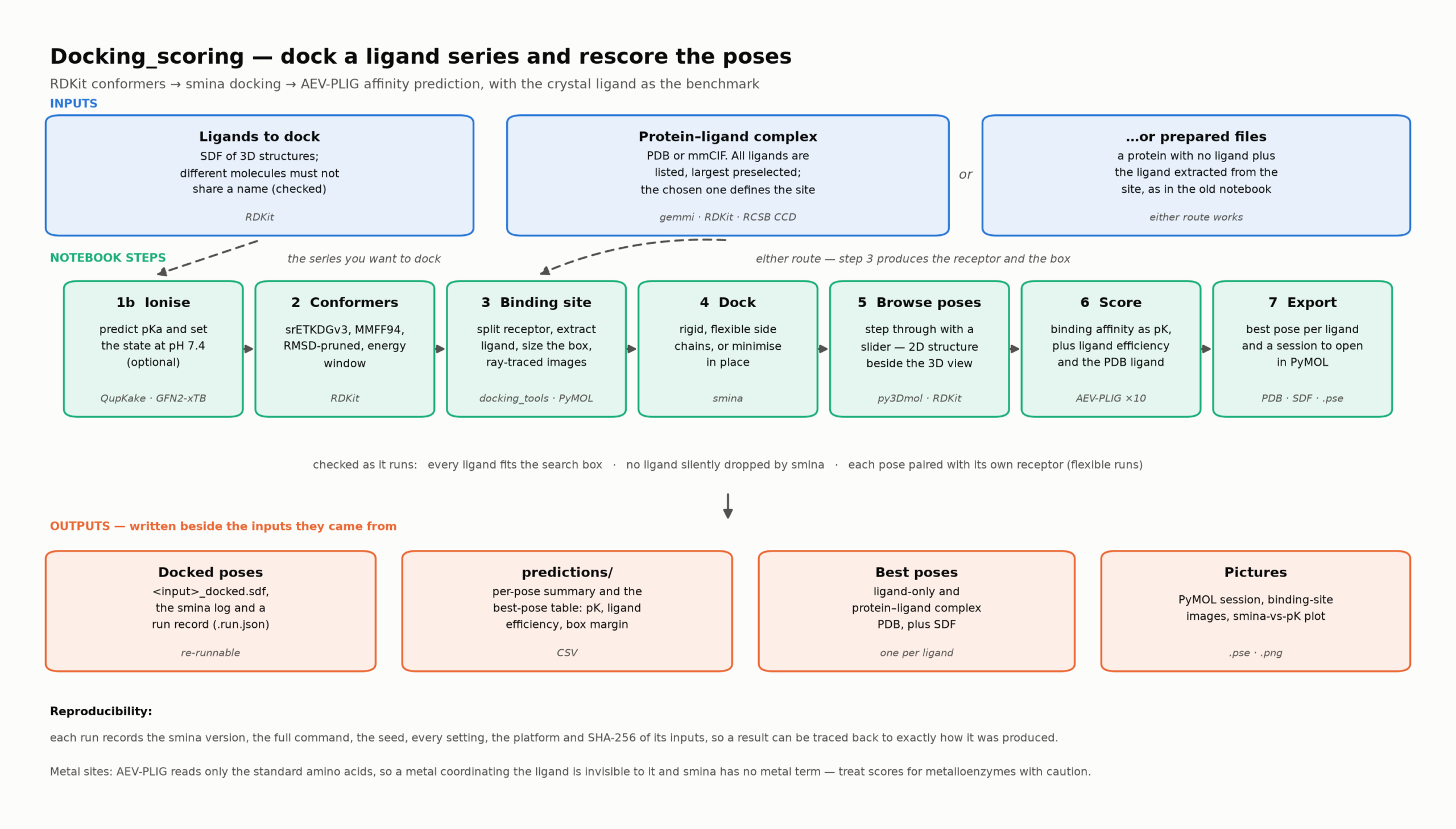
In 2020 as a result of lockdown I was asked to help create a course for MRes students as an introduction to computer-aided drug design
This looks interesting, High-throughput experimentation (HTE) accelerates molecular discovery but struggles to quantify yields without pure analyte standards. The current need to purify standards increases
I just noticed that the Compound Lookup extensions have been downloaded over 100 times (Safari + Chrome) and I’ve received some positive feedback.. I’m delighted
QupKake predicts micro-pKa values with GFN2-xTB plus graph neural networks. Its README targets Linux. On an Apple Silicon Mac the obvious routes all fail: This
Jeremy Tame recently mentioned a python script to produce clickable Ramachandran plots, code is available on GitHub https://github.com/JezTame/pymol-rama His website also describes several other useful
UK registered micro, small or medium sized enterprise (SMEs) can apply for a share of up to £3.1 million to deliver feasibility studies for frontier
Clustering is an invaluable cheminformatics technique for subdividing a typically large compound collection into small groups of similar compounds. One of the advantages is that
This a Google Chrome Extension, it allows you so select a drug name in a web page (for example), right-click and from the dropdown menu
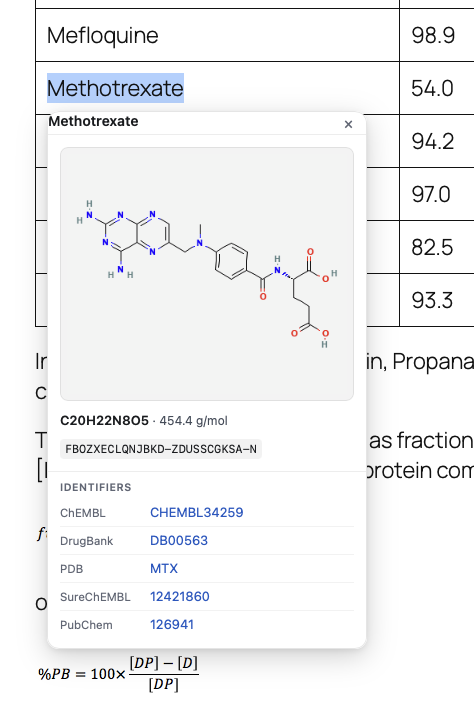
This a Safari Extension, it allows you so select a drug name in a web page (for example), right-click and from the dropdown menu there